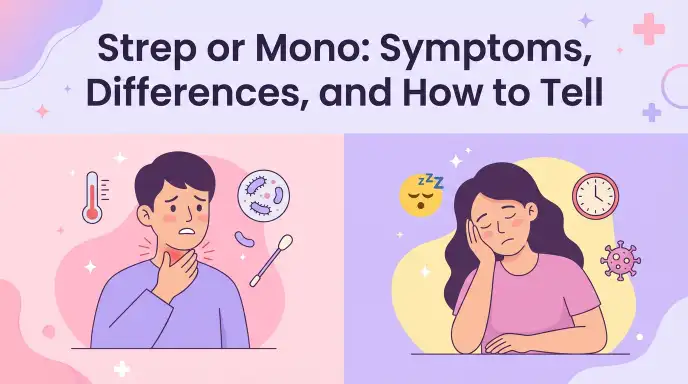
Strep throat is a bacterial infection treated with antibiotics, while mono is a viral illness that usually clears up with rest and time.
Sore throat, fever, and swollen glands can leave you wondering whether you’re dealing with strep or mono. Because the early symptoms overlap so closely, it’s easy to mix the two up.
Strep throat is caused by group A Streptococcus bacteria and often comes on suddenly with severe throat pain. Mono, also called infectious mononucleosis, is usually caused by the Epstein-Barr virus and tends to bring deep fatigue that lingers for weeks.
The difference matters because the treatment is not the same. Antibiotics can clear strep quickly, but they don’t work against mono, which is why getting the right diagnosis is so important.
In this article, we’ll compare the symptoms, causes, testing methods, and treatment options for strep and mono. You’ll also learn when it’s time to see a doctor so you can get the right care.
Strep or Mono: Quick Answer
What Is the Main Difference?
The main difference between strep throat and mono is their cause and the way they affect the body.
- Strep throat: A bacterial infection that often causes a sudden sore throat, fever, pain when swallowing, and sometimes swollen tonsils with white patches.
- Mono: A viral illness that often causes a sore throat, swollen lymph nodes, fever, and strong or lasting tiredness.
Strep can often be treated with antibiotics when testing confirms a bacterial infection. Mono is caused by a virus, so antibiotics do not treat the virus itself.
Quick Comparison Table
| Feature | Strep throat | Mono |
| Main cause | Group A Streptococcus bacteria | Usually Epstein-Barr virus |
| Sore throat | Often starts suddenly | Can be severe |
| Fever | Common | Common |
| Tiredness | May occur | Can be strong and last for weeks |
| Swollen lymph nodes | Common, often in the front of the neck | Common, often around the back of the neck too |
| Cough or runny nose | Usually absent | May occur, but not defining signs |
| Treatment | Antibiotics when indicated | Rest, fluids, and symptom relief |
| Specific tests | Rapid strep test or throat culture | Blood tests in some cases |
These patterns can help you understand the difference, but they cannot prove which illness you have. Other infections can cause similar symptoms, too.
The Main Symptoms of Strep Throat and Mono:
How Do Strep and Mono Symptoms Compare?
Both illnesses can cause a painful throat and swollen tonsils. Still, some symptoms may offer clues about the cause.
Symptoms that often point toward strep throat:
- A sore throat that starts quickly.
- Fever.
- Pain when swallowing.
- Red, swollen tonsils, sometimes with white patches.
- Tender lymph nodes at the front of the neck.
- Small red spots on the roof of the mouth.
Symptoms that may point toward mono:
- Strong tiredness that affects daily life.
- A sore throat that may be severe.
- Fever and swollen tonsils.
- Swollen lymph nodes, including at the back of the neck.
- Headaches and body aches.
- Sometimes a swollen spleen or liver.
These signs overlap. White patches on the tonsils, for example, can occur with either illness. You cannot confirm strep or mono by looking at your throat alone.
Does a Cough Mean It Is Not Strep?
A cough, runny nose, hoarse voice, or pink eye often suggests a viral infection rather than strep throat. However, symptoms do not always follow a clear pattern. A healthcare professional can decide if testing is needed.
If your sore throat is severe, lasts longer than expected, or comes with a high fever, contact a healthcare professional.
How Do Doctors Test for Strep or Mono?
Tests for Strep Throat
A clinician may take a swab from the back of your throat to look for group A strep bacteria.
Common tests include:
- Rapid strep test: Gives a result quickly.
- Throat culture: Checks if strep bacteria grow from the sample. It can detect some infections missed by a rapid test.
For children aged 3 years and older, US CDC guidance recommends a throat culture after a negative rapid antigen test. For adults, a follow-up culture is not usually needed. Local guidance may differ.
Tests for Mono
Doctors may assess your symptoms and examine your throat, lymph nodes, and abdomen. In some cases, they may order blood tests to help confirm mono or rule out other causes.
A blood test may look for changes in white blood cells or antibodies linked to the Epstein-Barr virus. Some tests can be less useful early in the illness, so a clinician may decide if repeat or more specific testing is needed.
Comparison Table: Testing
| Test | Strep throat | Mono |
| Throat swab | Common | Not the main test |
| Rapid test | Detects strep bacteria | Not used to diagnose mono |
| Throat culture | Can confirm strep | Does not confirm mono |
| Blood test | Not usually the main test | May help confirm mono |
| Can symptoms alone confirm it? | No | No |
If your symptoms fit both illnesses, ask a clinician if you need testing for one or both.
Treatment: What Helps Strep and Mono?
How Is Strep Throat Treated?
When a test confirms strep throat, a healthcare professional may prescribe antibiotics. These medicines help treat the bacterial infection, reduce its spread, and lower the risk of certain complications. Take them exactly as prescribed, and do not use leftover antibiotics.
You can also help ease a sore throat by:
- Drinking plenty of fluids.
- Getting enough rest.
- Choosing soft foods that are easy to swallow.
- Using suitable pain or fever medicine according to the label and professional advice.
Ask a pharmacist or clinician which medicine is safe for your age and health needs.
How Is Mono Treated?
Mono is usually caused by a virus, so antibiotics do not treat the virus itself. Most people improve with time, rest, fluids, and suitable pain relief.
One key difference is that mono can cause the spleen to become enlarged. Avoid contact sports, heavy lifting, and strenuous activity until a healthcare professional says it is safe to return. A ruptured spleen is rare but can be life-threatening.
Do not take antibiotics without medical advice. In particular, amoxicillin and ampicillin can cause a rash in people who have mono. If you have both a confirmed bacterial infection and mono, your clinician can choose suitable treatment.
How Long Do Strep and Mono Last?
Recovery Time for Each Illness
Strep throat and mono have different recovery patterns. The time it takes to feel better depends on the person, the severity of the illness, and if complications occur.
- Strep throat: With the right antibiotic treatment, symptoms often begin to improve within a day or two. Contact your clinician if you are not improving after 48 hours of antibiotics.
- Mono: Many people begin to feel better within 2 to 4 weeks. However, tiredness may last for several more weeks or longer.
Recovery Comparison Table
| Recovery point | Strep throat | Mono |
| Typical improvement | Often within 1–2 days after starting suitable antibiotics | Often improves over 2–4 weeks |
| Main concern | Persistent symptoms or complications | Lasting fatigue |
| Return to school or work | Follow medical advice and local rules | When you feel well enough |
| Sports and exercise | Return as symptoms improve and guidance allows | Avoid strenuous activity until medically cleared |
| Antibiotics | Used for confirmed strep | Do not treat the virus |
Do not rush your recovery. If your symptoms get worse or you are not improving as expected, seek medical advice.
When Should You Seek Medical Care?
Warning Signs You Should Not Ignore
Contact a healthcare professional if you have a severe sore throat, fever, swollen neck glands, or unusual tiredness. Testing may be needed to find the cause.
Get emergency medical help if you have:
- Trouble breathing.
- An inability to swallow saliva.
- Severe or sudden abdominal pain, especially if you may have mono.
- Signs of severe dehydration or rapidly worsening symptoms.
Mono can sometimes enlarge the spleen. Sudden, severe abdominal pain may signal a rupture, which needs urgent care.
Do not try to diagnose yourself based only on throat color, white patches, or tiredness. Other illnesses can cause similar signs.
FAQs:
1. How Can You Tell if You Have Strep or Mono?
Strep often starts suddenly with a sore throat and fever. Mono often causes strong tiredness, swollen lymph nodes, and a sore throat that may last longer. However, symptoms overlap, so medical testing may be needed.
2. Can Strep and Mono Have the Same Symptoms?
Yes. Both can cause fever, sore throat, swollen tonsils, and swollen lymph nodes. A throat swab can help diagnose strep, while blood tests may help confirm mono.
3. Can You Have Strep and Mono at the Same Time?
Yes, although having symptoms does not prove that you have both. A clinician can decide which tests are needed and if treatment for a bacterial infection is appropriate.
4. Does White Pus on the Tonsils Mean Strep?
No. White patches can occur with strep, mono, and other infections. Their appearance alone cannot tell you which illness you have.
5. Which Is Worse, Strep or Mono?
Neither illness is always worse. Strep can cause complications if it is not treated when treatment is needed. Mono can cause severe fatigue and, in some cases, an enlarged spleen. The effect varies from person to person.
6. Do Antibiotics Help Mono?
No. Antibiotics do not treat the virus that causes mono. They may be needed if a clinician confirms a separate bacterial infection. Some antibiotics, including amoxicillin and ampicillin, can cause a rash in people with mono.
7. When Can You Return to Sports After Mono?
Do not return to contact sports or strenuous exercise until your healthcare professional clears you. Mono can enlarge the spleen, and physical impact or heavy exertion may cause a dangerous rupture.
Conclusion:
Understanding strep or mono starts with knowing that these are two different illnesses. Strep throat is caused by bacteria and may need antibiotics. Mono is usually caused by the Epstein-Barr virus and is mainly managed with rest, fluids, and time.
Both illnesses can cause a sore throat, fever, swollen tonsils, and tender glands. However, strong tiredness that lasts for weeks may point toward mono, while a sudden sore throat with fever may suggest strep. These clues are useful, but they cannot confirm a diagnosis.
If you have a painful throat, fever, or swollen glands, speak with a healthcare professional about if testing is needed. Do not take antibiotics without medical advice, and follow the recommended treatment if strep is confirmed.
Most importantly, give your body time to recover. Rest, drink enough fluids, and watch for warning signs. If mono is suspected, avoid contact sports and heavy exercise until you are medically cleared. Seek emergency care for trouble breathing, inability to swallow saliva, or sudden severe abdominal pain.
Continue reading!